Aussiedoodle:
Size, temperament & care.
An Aussiedoodle, also called an Aussiepoo, is an Australian Shepherd–Poodle cross. These dogs can be affectionate, quick to learn and full of energy. Their adult size, coat and personality vary—even within the same litter.
Start with the dog’s needs: daily activity, patient training and regular coat care. Then decide whether those needs fit your life.
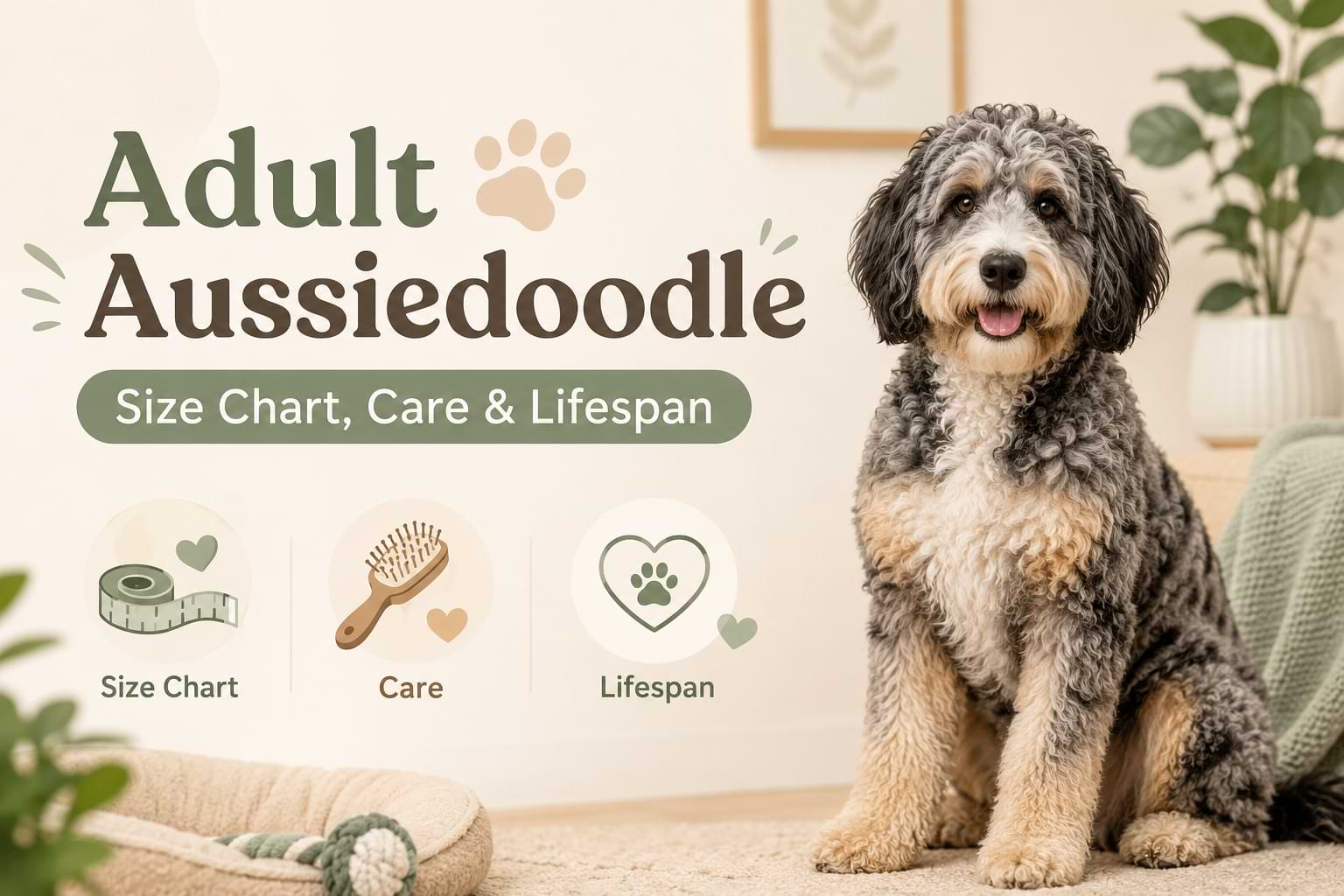
- Parent breeds
- Australian Shepherd + Poodle
- Daily commitment
- Activity, training & companionship
- Shedding
- Variable; never guaranteed zero
- Coat care
- Regular brushing & grooming
A good match starts with your routine.
A smaller dog still needs time and attention. Think about an ordinary workday, a rainy weekend and who can help when your plans change.
What living with an Aussiedoodle can involve
Many enjoy learning and spending time with their people. Herding tendencies can show up as chasing or heel-nipping; gentle, reward-based training and supervised introductions matter around children and other animals.
Apartment living is a practical question about outings, noise and care arrangements—not just floor space. Meet the individual dog and ask about its behavior in a home like yours.
If you want very little grooming, minimal daily activity or a guaranteed allergy-friendly pet, reconsider the match before committing.
Explore everyday life with an Aussiedoodle →Your ownership preparation list
Check what you have arranged. This is a planning checklist, not a compatibility test.
Use these four points to plan your next steps. Your answers are not saved.
How big does an Aussiedoodle get?
There is no single adult size. Both parents’ sizes and the individual puppy’s growth matter. “Toy,” “mini” and “standard” are commonly used labels, not a uniform size standard for this cross.
| Size label | Approximate adult weight | What to check |
|---|---|---|
| Toy / very small | No agreed universal range | Ask for both parents’ actual adult weights; do not rely on the label. |
| Mini | 15–40 lb / about 7–18 kg | Ask how the breeder defines “mini” and what previous adult offspring weighed. |
| Standard | 40–70 lb / about 18–32 kg | Plan for adult transport, handling, food and grooming needs. |
Coat, shedding and allergies.
Aussiedoodles may have straight, wavy or curly coats. Color and curl do not tell you everything about grooming, shedding or how a person with allergies will react.
Shedding varies
A Poodle parent does not guarantee a non-shedding puppy. Ask about the individual dog and related adult dogs rather than accepting a promise based only on a generation label.
Understand shedding →No allergy guarantee
No dog is completely hypoallergenic. Less loose hair does not mean no allergens. If allergies affect your household, get appropriate medical advice and discuss the uncertainty before adopting.
AKC’s allergy guidance →Coat care is ongoing
Build brushing and handling into your routine. Ask a groomer to show you how to reach through your dog’s coat and agree a schedule suited to its length, texture and tendency to mat.
Plan coat care →What do F1, F1b and F2 mean?
F1 usually describes an Australian Shepherd × Poodle cross. F1b describes a backcross; ask which parent breed was used. F2 commonly means two F1 dogs were crossed. These labels describe ancestry, not a promise of personality, health or coat.
Read the generation guide →What about merle and other colors?
You may see merle patterns, solid colors and white markings. Choose on health information, temperament and fit—not a “rare color” sales claim. Appearance alone cannot reveal every inherited variant.
Explore the blue merle pattern →Make room for more than a walk.
Use this as a planning framework. Adjust activity and rest for your dog’s age, health and response; a puppy or a dog recovering from illness needs a different plan from a healthy adult.
Move & explore
Allow time for a toilet break, an appropriate walk and sniffing. Look at your actual schedule before adding a dog to it.
Exercise considerations →Learn & settle
Plan short reward-based practice, suitable enrichment and rest. Arrange help when you will be away; build alone-time skills gradually.
Start with training →Connect & care
Make time for interaction, another outing and gentle coat checks. Practice calm handling before grooming becomes a struggle.
Puppy care essentials →For meals, choose a complete diet appropriate for life stage and discuss portions with your vet. Use your food’s calorie information and monitor body condition rather than copying another dog’s cup measure. Explore feeding basics.
What will ownership cost you?
The purchase or adoption fee is only the beginning. A useful budget starts with quotes from services you can actually use.
- Upfront: adoption or purchase, transport, safe equipment and initial veterinary care.
- Recurring: food, grooming, preventive care, training and help while you are away.
- Unexpected: illness, injury, boarding changes and replacement equipment.
Ask what an adoption or purchase fee includes. A high price is not proof of good breeding, and a low price alone is not proof of poor care.
Budget without the calculator: annual cost = 12 × monthly food, care and savings + yearly routine vet costs + grooming price × 52 ÷ weeks between grooms. Divide by 12 for a monthly average. Purchase, setup and emergency shortfalls are extra. If the calculator is unavailable, use these figures in a spreadsheet.
Health checks matter more than labels.
A crossbreed can inherit conditions associated with either parent breed. Ask for relevant screening records and have a veterinarian help you interpret them.
Before choosing a puppy
- Ask for both parents’ identities and documented health-test results.
- Discuss appropriate joint, eye and inherited-condition screening for the specific parent breeds and sizes.
- Distinguish a general veterinary check from inherited-disease testing. A DNA panel does not replace every physical screening.
- Ask about socialization, the living environment, contracts and support if circumstances change.
Understand MDR1 / ABCB1
Some dogs with herding-breed ancestry inherit a variant affecting sensitivity to certain medications. Coat color cannot tell you the result. Ask your veterinarian whether testing is appropriate and share any existing result before treatment.
A dog with one copy can also have increased sensitivity. Do not use a breed label or an online calculator to decide a medication dose.
Read Cornell’s MDR1 explanation →This guide is educational and does not diagnose or prescribe. For a dog that is unwell or in distress, contact a veterinarian directly.
Adoption or breeder: what should you check?
Meet the individual dog and ask for evidence before paying a deposit. An appealing color, generation label or low-shedding promise does not tell you whether a dog is the right match.
Questions for a rescue
- What is known about the dog’s behavior, medical history and grooming needs?
- How does it cope with time alone, children and other animals?
- What support, introductions and return arrangements are available?
Questions for a breeder
- Can you verify the parents’ identities and relevant health-screening results?
- Can you meet the mother and see where puppies are raised, in person or through a live video visit?
- What socialization, records, written contract and ongoing support are included?
Ask your veterinarian which screening records matter for the parents involved. A routine vet check or a generic “DNA tested” claim is not the same as documented, appropriate breeding health screening. This website is an educational guide; it does not list puppies for sale or verify sellers.
Go deeper into life with your dog.
Aussiedoodle questions, answered.
Is an Aussiedoodle the same as an Aussiepoo?
Yes. Aussiepoo and Australian Shepherd Poodle mix are common names for an Aussiedoodle. The name does not specify adult size, generation or coat type, so ask about the individual dog and its parents.
Is an Aussiedoodle a good family dog?
It can be a good match for a household able to meet its activity, training and grooming needs. Temperament varies. Supervise interactions with children, provide a quiet resting area and plan introductions to other pets.
How big is a full-grown Aussiedoodle?
Size depends on the parents and the individual dog. As broad guide ranges, minis may weigh around 15–40 lb (7–18 kg), while standards may weigh around 40–70 lb (18–32 kg). Labels differ between breeders and dogs can fall outside those ranges.
Do Aussiedoodles shed?
They can. Shedding varies between individual dogs; a curly coat or F1b label cannot guarantee no shedding. Grooming is still important when little loose hair is noticeable.
Are Aussiedoodles hypoallergenic?
No dog or crossbreed is guaranteed hypoallergenic. Allergens are not limited to shed hair. A low-shedding dog can still trigger a reaction, so treat “allergy-safe” sales claims cautiously.
Can an Aussiedoodle live in an apartment?
Some can, with appropriate outings, enrichment, training and a realistic care plan. Consider noise, toilet access, time alone and the individual dog’s behavior. Small size alone does not make a dog easy to keep in an apartment.
How long do Aussiedoodles live?
Breed guides often give an approximate lifespan of 10–15 years, but this is a broad expectation rather than a prediction for an individual dog. Genetics, adult size, health and ongoing care all matter. Ask your vet about care for your dog’s life stage.
Is F1b better than F1?
Neither label is a universal quality rating. Ask which cross produced the litter, what the parents are like and which health tests were completed. Select an individual dog for your household rather than assuming a generation guarantees coat, behavior or health.
How much does an Aussiedoodle cost?
Acquisition costs differ by location, rescue or breeder, age and what is included. Request current quotes and screening records. Use the budget planner above for recurring costs; it deliberately uses your own figures instead of presenting one price as universal.
Muhammad Rehan Iqbal
Editor at Aussiedoodle.net. This guide brings together breed information, practical ownership questions and links to veterinary and health-screening resources. It does not claim an individual veterinary assessment.
About the site · Suggest a correction · Instagram · Facebook
Sources & reading
Checked September 29, 2026. Size and lifespan ranges are descriptive; they are not breed standards or individual guarantees.